


Reformer Pilates Has Gone Mainstream. What Happens Next?

The mainstream moment has already happened. What matters now is what wider access changes: client expectations, competition, quality, and the role of specialist Pilates studios.
Reformer Pilates no longer needs an introduction. You’ll find it in boutique studios, health clubs, multidisciplinary practices and, more and more, mainstream gyms. For a lot of people, the Reformer is now their first experience of Pilates.
That took years, and no single launch or operator made it happen. The question worth asking now is what mainstream status changes.
Access changes expectations
Wider availability is good for Pilates. More people know what a Reformer is, more are willing to try a class, and the barrier to entry is lower than it used to be.
Familiarity also raises the bar. Clients can compare studios more easily, and they notice the differences: the teaching, the room, the condition of the equipment, how new clients are looked after, the programming, and the service. What felt special a few years ago quickly becomes what people expect.
That is a normal stage in any category’s growth. As access widens, the experience around the product matters more.
Scale and specialisation can sit side by side
Mainstream growth doesn’t mean specialist studios need to copy larger fitness models, and it doesn’t make large group Reformer any less legitimate. They meet different needs.
High-capacity group classes bring Pilates to people who want convenience, energy and an easy way in. Specialist studios can offer continuity, individual attention, a wider range of apparatus, deeper progression or experience with particular client groups. Plenty of successful businesses do some of both.
A more useful question than which model counts as "real Pilates" is what each business promises its clients, and whether it is set up to deliver on that promise.
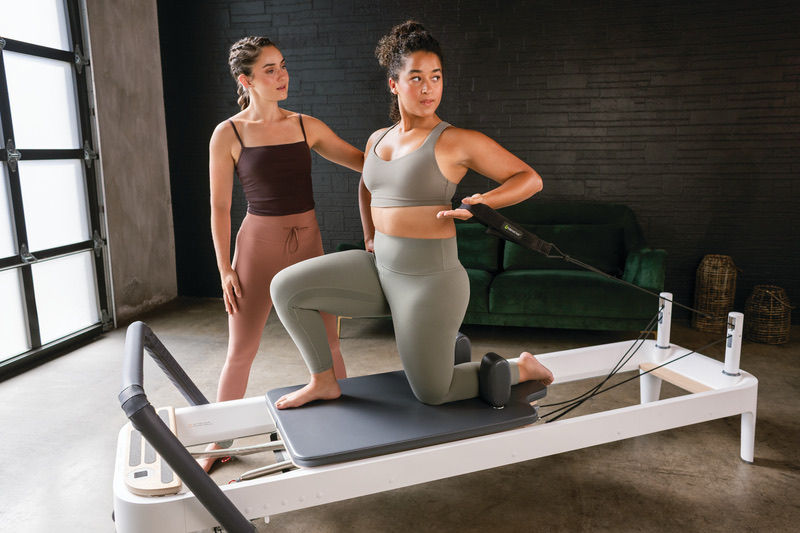
Sameness is the bigger risk
When a category grows quickly, businesses tend to look alike: similar rooms, similar timetables, similar language and similar introductory offers. That makes it harder for clients to see the differences that do exist.
Adding novelty rarely fixes this. Being specific usually does. A studio that knows who it serves can make better decisions about class size, instructor development, equipment, programming, private sessions, pricing and the space itself. Over time, those decisions add up to an experience people recognise.
Group Reformer can be the start of a longer journey
For the profession, wider Reformer participation is an opportunity. Someone might start with a group class and later discover that Pilates also includes private sessions, small groups, other apparatus and programming that changes as their goals change.
Not every client will want that, and not every studio needs to offer it. Still, the breadth of the method gives specialist studios options that a single-format business may not have.
There is a commercial side to this too. Growth doesn’t have to mean fitting more people into the same class. It can also mean giving existing clients more relevant ways to keep going.
Execution will decide what comes next
Now that Reformer Pilates is mainstream, it answers to the same forces as any established market: choice, value, consistency and trust.
That puts more weight on the fundamentals. Good instructors, suitable equipment, thoughtful programming, well-run spaces, clear positioning and reliable support behind both the equipment and the business.
Who brought Reformer to the mainstream first will matter less from here. What will count is understanding what clients need once Reformer is everywhere.
Thinking about how your studio develops from here? Talk to HF
The Pilates Notebook is published by HF Industries, distributor of Balanced Body equipment in Australia and New Zealand.

Comments