


Your Guide to Choosing the Right Pilates Reformer for Home Use

Setting up a Pilates space at home is an exciting milestone. Whether you are looking to maintain consistency between studio sessions, manage a targeted rehabilitation program, or simply enjoy a daily mindful movement practice in your own living space, choosing the right equipment requires a balance of performance, design, and practical living considerations.
For Australian fitness enthusiasts navigating the market, the ideal home reformer should deliver a professional, reliable experience without compromising on the quality or biomechanical integrity you would expect from a commercial studio apparatus.
Here are the key factors to consider when evaluating a reformer for home use, designed to help you find an investment that truly lasts.
1. Reformer Footprint, Portability, and Storage for Home Use
Space is often the primary consideration for a home user. Unlike a commercial studio with dedicated square footage, residential spaces require flexibility.
Dimensions and Clearance: Standard reformers generally range between 90 to 98 inches in length. It is essential to measure your intended workout area to ensure full clearance for arm and leg extensions.
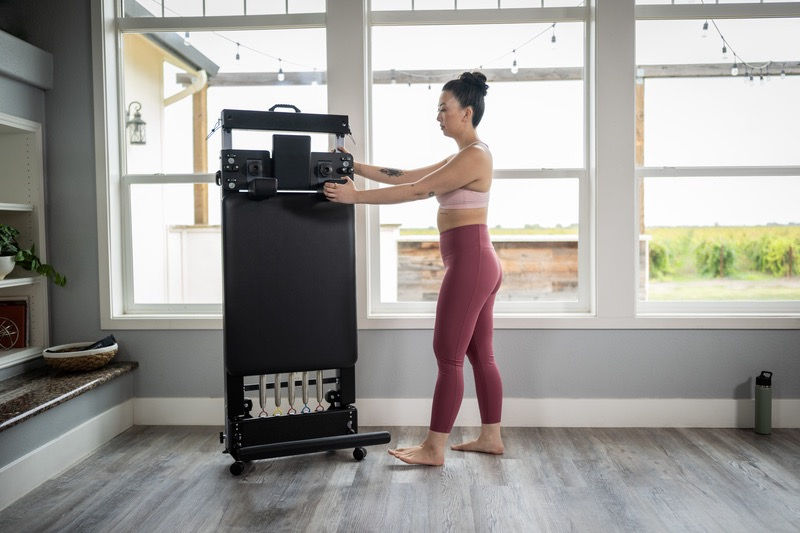
Storage Solutions: If your reformer needs to share a room with a home office or guest bedroom, look for models featuring vertical standing capability and smooth transport wheels, like the Metro IQ or Allegro Reformer. A reformer that can safely stand upright against a wall when not in use gives you your living space back instantly.
Portability vs. Stability: While some buyers initially consider fold-up options, dedicated practitioners often find that a robust, rigid frame offers superior performance. Premium brands achieve the best of both worlds by providing lightweight maneuverability alongside rock-solid structural stability. The Metro IQ offers a unique telescoping design that offers both a smooth carriage ride and ease of storage.
2. Carriage Travel, Frame Height, and Accessibility
How a reformer feels underneath you depends heavily on its track length and profile height.
Carriage Travel: Ensure the carriage offers fluid, uninterrupted travel to accommodate different heights comfortably, preventing any jarring stops during long-lever exercises.
Frame Height: Low-profile reformers sit closer to the floor, offering a sleek, minimalist aesthetic and support for those unsure of balance during standing exercises. However, studio-height frames are often preferred for home use if you want easier access to your reformer, particularly for users managing joint stiffness, mobility limitations, or rehabilitation goals. The Luna Reformer by Mundo offers a studio-height frame and accessories included in the standard package.
3. Resistance Systems and Adjustability
A versatile reformer allows you to scale your practice effortlessly, from gentle mobility work to high-intensity athletic conditioning.
Spring Grading and Configuration: Look for systems that offer a comprehensive range of tension settings using high-grade springs. This ensures smooth, progressive resistance for everything from delicate rehabilitation movements to heavy-load footwork.
Springbars and Adjustability: Multi-position springbars (Rialto Reformer) can make your practice smoother. They allow you to fine-tune the starting position of the carriage to suit your height and make adjustments quickly and safely.
4. Comfort, Ergonomics, and Seamless Adjustments
During a dynamic flow, you don't want to be slowed down by complex equipment adjustments.
Footbars and Straps: Quick-release, multi-position padded footbars allow you to transition smoothly between exercises. Similarly, quick-adjust rope systems and dual-loop straps eliminate frustrating knot-tying when switching from footwork to arm series.
Supportive Upholstery: Ergonomic, high-density foam shoulder rests and multi-position headrests ensure proper spinal alignment and neck comfort throughout your session.

5. Build Quality, Aesthetics, and Long-Term Value
A home reformer is a significant wellness investment, and the materials chosen should reflect both durability and your home’s interior design.
Frame Materials: You can choose between sleek, modern powder-coated aluminum frames or warm, classic wood finishes (such as American maple) that blend seamlessly into residential living areas.
Commercial-Grade Reliability: Choosing high-end equipment engineered to commercial standards ensures that your home reformer remains silent, stable, and completely wobble-free under dynamic loads. Brands that supply top-tier commercial studios, such as Balanced Body, bring that exact engineering pedigree into the residential space, offering unmatched durability and peace of mind with robust structural warranties.
Finding the Perfect Fit for Your Practice
Ultimately, the right home reformer is one that invites you onto the carriage day after day. By prioritising professional-grade biomechanics, thoughtful storage capabilities, and reliable, high-end construction, you can replicate an authentic studio experience right in your own home.
For Australian Pilates enthusiasts seeking equipment that bridges the gap between elite performance and residential living, exploring industry-leading apparatus like the Balanced Body Allegro 2 or classic wood reformers provides a reliable path to a lifelong movement practice.
Need help deciding what best suits your needs? Talk to HF.


Comments