


Recovery Is Becoming Part of the Fitness Conversation. Where Does Pilates Fit?
Updated: 7 days ago
Recovery is becoming a more visible part of fitness and performance. For Pilates businesses, the opportunity is not to chase the trend, but to think more deliberately about how movement can fit within it.
Recovery has traditionally sat at the edge of the fitness offer. Increasingly, it is moving into the mainstream.
Massage, sauna, compression, hot and cold therapies and dedicated recovery spaces are now familiar parts of the wider fitness and wellness market. The numbers support the shift. ClassPass reported global wellness reservations up 37% in 2025, with massage bookings up 42%, sauna up 40% and sports recovery up 50%. Mindbody has described holistic wellness as a defining industry theme, while the American College of Sports Medicine added hot and cold therapies to its 2025 worldwide fitness trends survey.
For Pilates businesses, the interesting question is not whether to install a sauna or become a recovery centre. It is what this broader change tells us about the way people are thinking about training.
A recent example came from the England football team, with footage shared on social media showing players using Balanced Body Reformers as part of a recovery session. The setting is elite sport, but the broader point travels well beyond it: training is increasingly being considered alongside what happens between harder sessions.
That creates an interesting space for Pilates. Not because Pilates needs to be repositioned as a recovery treatment, but because the method gives instructors considerable scope to change the demands and purpose of a session.
More intensity is not always the answer
The fitness industry has spent years becoming very good at selling effort. Harder sessions, heavier loads, higher output, and measurable performance all have an important place.
Recovery adds another idea: the session someone needs today may not be the hardest session they can tolerate.
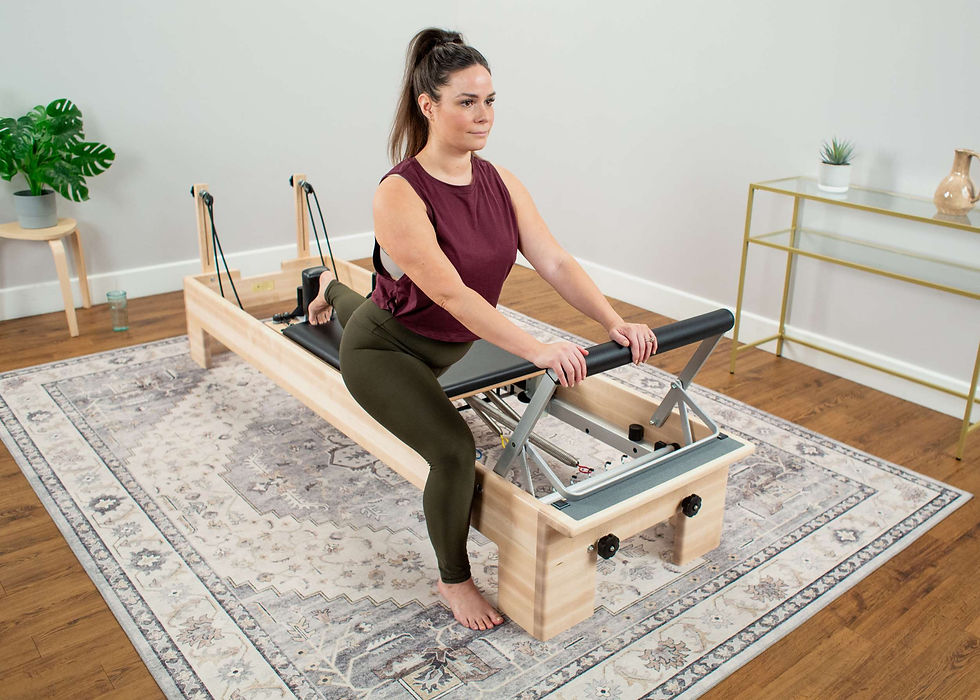
That is already familiar territory for good Pilates teaching. Apparatus, spring settings, range, tempo, support and exercise choice can all be adjusted. A session can be demanding, but it can also be organised around control, mobility, breathing, supported movement or simply moving well without chasing fatigue.
This does not make Pilates a recovery treatment. It does mean Pilates businesses can think about movement as one part of a broader training and recovery week.
Recovery can be programmed, not just purchased
Much of the recovery market is built around passive services and technology. Pilates offers something different: participation.
A lower-intensity movement session can still ask the client to pay attention, organise the body and work through useful ranges. For an operator, that creates programming possibilities without suggesting that one class can replace sleep, nutrition, medical care or other recovery practices.
It can also change how the timetable is considered. The client who does not want another high-output session may still want to come to the studio. A mobility-focused class, a more individual session or a different apparatus experience can give that client a reason to stay engaged without every visit needing to look the same.

Small equipment can change the session
The Pilates Arc is a good example of how a relatively simple tool can broaden what an existing studio can teach. Balanced Body describes it as three tools in one: an exercise Arc, a Spine Corrector and a wedge for the Reformer. At 1.8 kg, it is light enough to move and store easily, and it can be used on the floor or positioned on a Balanced Body Reformer.
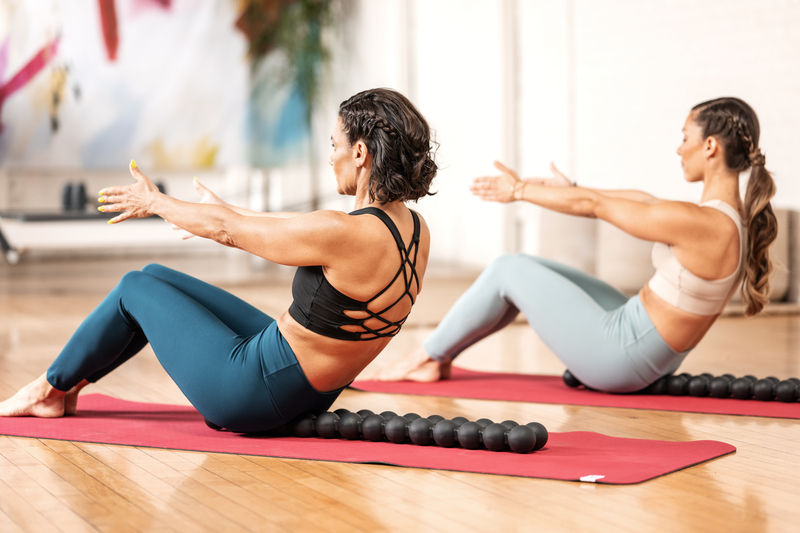
On the Reformer, the Arc can change the relationship between the client and the carriage, providing back support and creating different options for strength and mobility work. Off the Reformer, its curves create another environment for spinal movement, supported positioning and mat-based programming.
The commercial point is not that every studio needs an Arc. It is that recovery-oriented programming does not necessarily require a new room full of recovery technology. Sometimes it begins with using the equipment already in the studio differently, or adding a versatile tool that creates a genuinely different session.
Recovery should fit the business, not the trend
A growing category can tempt operators to add services simply because consumers are talking about them. The same rule should apply here as it does to any equipment or programming decision: start with the client and the operating model.
Who would use a recovery-oriented session? What would the instructor actually teach? Where would it sit in the week? Does it complement the studio proposition, or is it simply another label on the timetable?
Those questions matter because recovery is a broad word. Used carelessly, it can promise almost anything. Used thoughtfully, it can describe a useful shift in emphasis: recognising that sustainable training includes different intensities, different objectives and different ways of moving.
For Pilates, that is not a completely new idea. It is an opportunity to articulate something the method has always been good at: adapting the work to the person in front of you.
Comments